In today’s competitive business environment, having a great product or service is not always enough to attract customers. Small businesses need to build an online presence, reach the right audience, and communicate their value effectively. This is where digital marketing for small businesses becomes important.
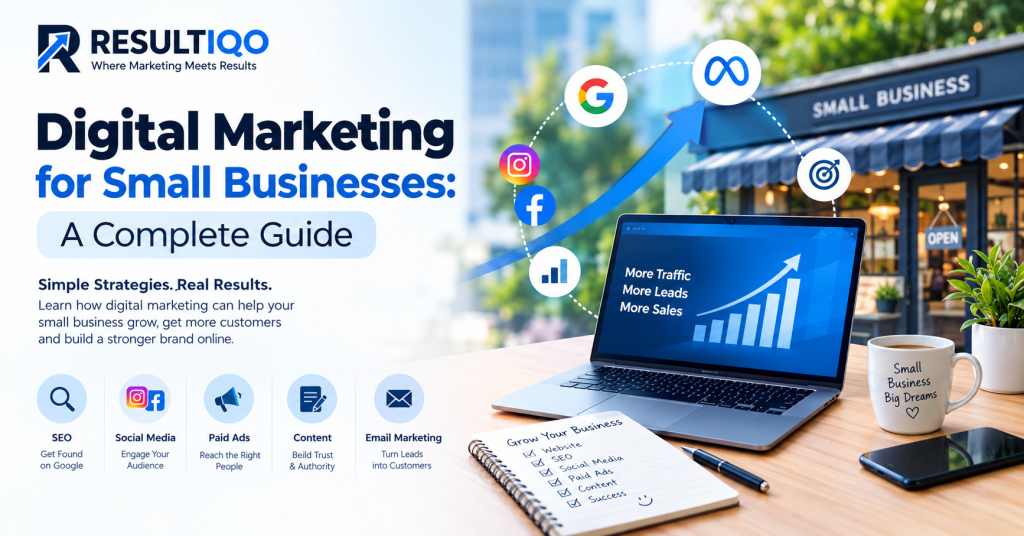
From search engines and social media to email campaigns and online advertising, digital marketing gives small businesses multiple ways to connect with potential customers. Unlike traditional marketing, digital strategies can be measured, adjusted, and scaled according to a business’s goals and budget.
In this complete guide, we will explore the most important digital marketing strategies that small businesses can use to increase visibility, generate leads, and build long-term customer relationships.
What Is Digital Marketing for Small Businesses?
Digital marketing refers to promoting a business, product, or service through online channels. These channels can include search engines, social media platforms, websites, email, online advertisements, and content.
For small businesses, digital marketing can provide an opportunity to compete for attention in their target market without relying entirely on expensive traditional advertising.
For example, a local restaurant can use Google search visibility, social media content, online reviews, and paid advertising to attract customers. Similarly, a service-based business can use SEO, blogs, Google Ads, and landing pages to generate leads.
The key is to choose strategies that match the business’s target audience and objectives.
Why Is Digital Marketing Important for Small Businesses?
One of the biggest advantages of digital marketing is the ability to reach specific audiences.
Traditional advertising can sometimes make it difficult to determine exactly who saw an advertisement and what action they took afterward. Digital marketing provides businesses with tools to track important metrics such as website visits, clicks, leads, conversions, engagement, and advertising performance.
Digital marketing can help small businesses:
- Increase online visibility
- Reach potential customers
- Generate qualified leads
- Build brand awareness
- Increase website traffic
- Communicate directly with customers
- Measure marketing performance
- Develop long-term customer relationships
However, simply being present online is not enough. Businesses need a well-planned strategy.
1. Build a Professional Business Website
Your website is often one of the first places potential customers visit when they discover your business.
A professional website should clearly communicate:
- What your business offers
- Who your products or services are for
- Why customers should choose you
- How customers can contact you
- What action visitors should take next
Your website should also be mobile-friendly, easy to navigate, fast, and designed around the customer experience.
For example, a digital marketing agency might include separate pages for SEO, social media marketing, Google Ads, content marketing, and other services. Each page can target a specific audience and search intent.
2. Focus on Search Engine Optimization
Search Engine Optimization (SEO) helps businesses improve their visibility in search engine results.
When someone searches for a product or service related to your business, appearing prominently in search results can bring valuable organic traffic to your website.
Small businesses can start with basic SEO activities such as:
- Researching relevant keywords
- Optimizing website titles and headings
- Creating useful content
- Improving website speed
- Optimizing images
- Creating location-specific pages
- Building relevant backlinks
- Maintaining accurate business information
Local businesses should also pay attention to local SEO, especially if customers visit a physical location or services are offered within a specific geographic area.
3. Use Social Media Marketing
Social media gives small businesses a way to communicate directly with their audience.
Depending on the target audience, businesses may use platforms such as Instagram, Facebook, LinkedIn, YouTube, or other relevant channels.
Effective social media content can include:
- Educational posts
- Short-form videos
- Product demonstrations
- Customer testimonials
- Behind-the-scenes content
- Industry tips
- Offers and promotions
- Frequently asked questions
The goal should not always be to sell. Providing useful and engaging content can help businesses develop trust and maintain an active relationship with their audience.
4. Try Paid Online Advertising
Organic marketing can take time, while paid advertising can help businesses reach potential customers more quickly.
Platforms such as Google Ads and Meta Ads allow businesses to create targeted advertising campaigns.
Google Ads can help businesses reach people who are actively searching for specific products or services.
Meta Ads can help businesses reach audiences based on factors such as interests, demographics, behaviors, and engagement.
The right advertising platform depends on the business, target audience, campaign objective, and budget.
Most importantly, businesses should track results instead of simply measuring how many people saw an advertisement.
5. Create Valuable Content
Content marketing is another important part of digital marketing for small businesses.
A business can create blogs, guides, videos, social media posts, case studies, FAQs, and other useful resources based on the questions its customers commonly ask.
For example, a home renovation company could publish articles such as:
- How Much Does a Kitchen Renovation Cost?
- How to Choose the Right Flooring
- Common Home Renovation Mistakes
This type of content can attract people who are researching a problem and may eventually become customers.
6. Build Your Online Reputation
Online reviews can influence how potential customers perceive a business.
Encourage satisfied customers to share genuine feedback on relevant platforms. Businesses should also respond professionally to customer reviews and address concerns where appropriate.
A strong online reputation can support trust, particularly for local businesses and service providers.
7. Track and Improve Your Results
One of the most important parts of digital marketing is measuring performance.
Businesses should identify key performance indicators (KPIs) based on their objectives.
These may include:
- Website traffic
- Leads generated
- Conversion rate
- Cost per lead
- Click-through rate
- Return on advertising spend
- Social media engagement
- Sales
Tracking these metrics helps businesses understand which activities are producing useful results and where improvements may be needed.
Creating a Simple Digital Marketing Strategy
Small businesses don’t need to use every digital marketing channel at once. A better approach is to start with a clear plan.
First, identify your target audience and understand their needs. Then define your primary goal, such as increasing website traffic, generating leads, increasing sales, or improving brand awareness.
Next, select the channels that are most relevant to your audience. Create useful content, optimize your website, promote your business where appropriate, and regularly review your results.
Digital marketing is an ongoing process. Strategies that work today may need to be adjusted as customer behavior, technology, and competition change.
Final Thoughts
Digital marketing for small businesses can provide a practical way to increase visibility, reach potential customers, generate leads, and build a stronger brand online.
A successful strategy does not necessarily require a huge budget. What matters is having clear goals, understanding your audience, creating valuable content, choosing the right marketing channels, and consistently measuring performance.
From SEO and social media to paid advertising and content marketing, small businesses can combine different strategies to create a digital presence that supports long-term growth.
At RESULTIQO, our approach is focused on helping businesses build practical digital marketing strategies designed around their goals, audience, and measurable results.
RESULTIQO — Where Marketing Meets Results.